New technology
Colossal Energy management has studied for years the deepwater geology in the Mozambique Channel and the Comoros Islands (a continuation of it), going back to the drilling in deep water Somalia in the early 80s of the Meregh-1 well by Esso Exploration (ExxonMobil). The challenges of cost and time inherent in deepwater settings are real and familiar to us. Colossal intends to raise its chances of success in the hunt for commercial oil in the Comoros by bringing to bear new tools and state-of-the-art technology.
ExxonMobil in the early 1980s and later, Statoil (now Equinor) in Norway, was developing a new technology in Oslo to map rock resistivity in deep water in the Barents Sea, when R/V Vema and Conrad were first surveying this area for Lamont-Doherty Geological Observatory of Columbia University. Oil and gas in pore spaces in reservoir rocks have high resistivities; Statoil (now Equinor) needed a new tool to measure them in deep icy Arctic waters. Statoil made submarine electromagnetic source power improvements together with marine sensor node sensitivity. These allowed them to map zones of higher resistivity in the subsurface and to progressively discover and develop a new Arctic frontier in the Barents Sea.
While seismic data allows imaging of stratigraphic and structural features below the seabed, they often don’t constrain commerciality of targets before drilling. This is where CSEM methods offer support for well-constrained geological models of the subsurface, complementing seismic methods as to where oil and gas columns are likely present in commercial volumes.
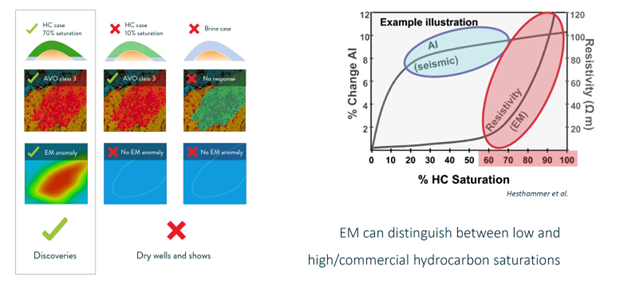
CSEM Edge vs. Seismic data
After nearly 3 decades innovation, Statoil improved the Controlled Source Electromagnetic Method (CSEM) to include 2D and 3D methods and coupled with new, stronger electromagnetic sources and larger, wider sea bottom arrays. Two decades later, in 2002, they spun off the company as EMGS (OSLO: EMGS).
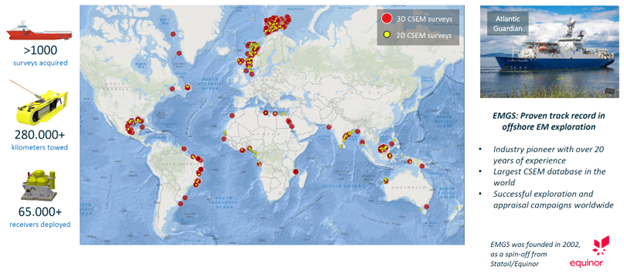
World wide CSEM experience
EMGS has today worked worldwide and applied the CSEM method in virtually every deepwater hydrocarbon basin in the world, with clients drawn from all the major IOCs. As a result, Colossal is collaborating with EMGS for new 3D resistivity surveying over select prospects in the Comoros with a view towards raising the chance of success for the presence of commercial liquid hydrocarbons in the Comoros.
This is the same method used by Statoil (now Equinor) in Barents Sea and elsewhere, where the chance of finding commercial oil was raised from 25% to more than 75% where a CSEM anomaly was present, compared with mostly dry outcomes in 2/3 of cases where there were no such anomalies. Colossal Energy Fields’ management believes the application of this CSEM technology to the deepwater setting of its blocks in the Comoros will focus attention on the highest ranking prospects in the company’s portfolio allowing a risk weighting of the prospective oil volumes in each play in each prospect in each block.
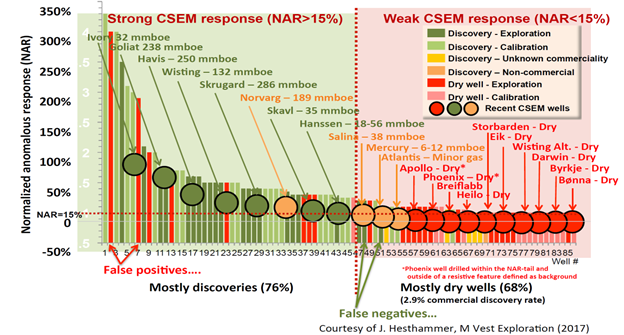
CSEM Impact on drilling results
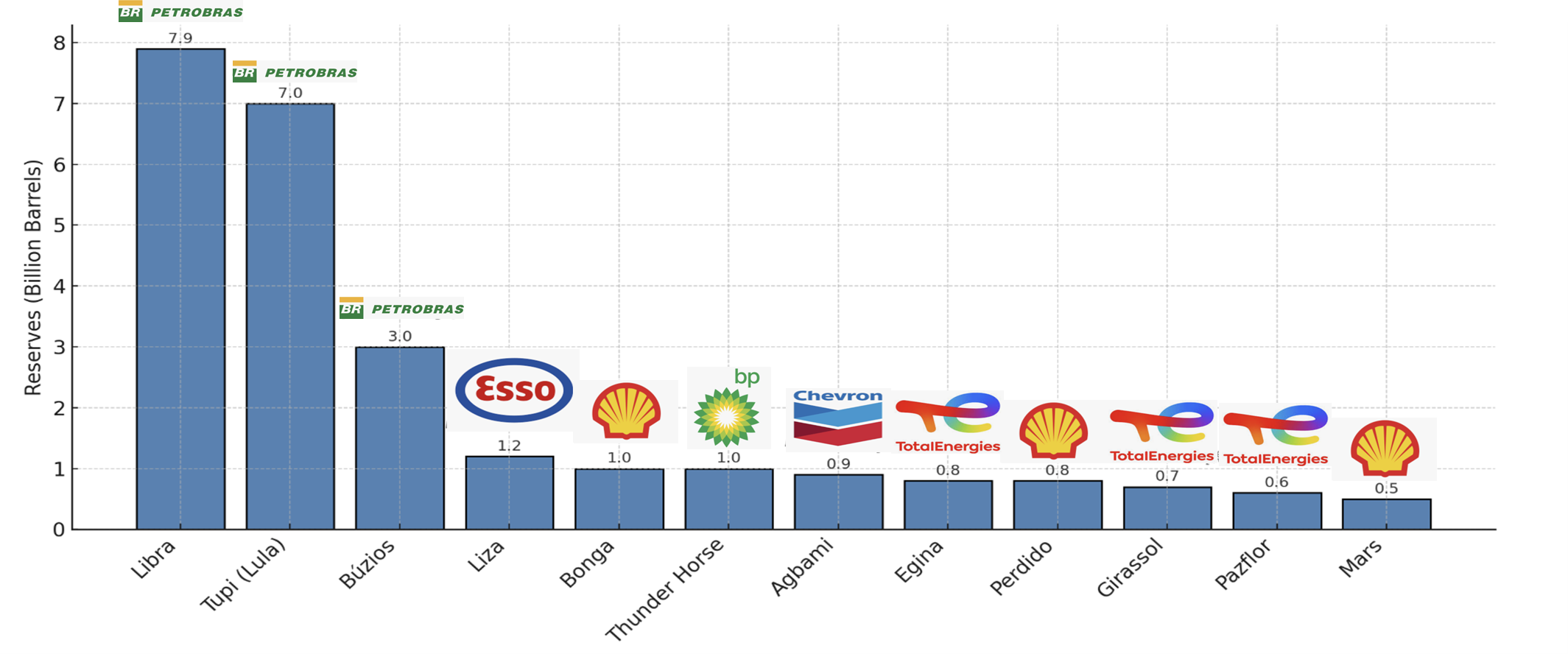
Leading IOCs have applied CSEM methods in worldwide deepwater settings to derisk the drilling of large, costly wells. The top deepwater fields in water depths of more than 2000m discovered to date by the biggest IOC operators were discovered or developed with the aid of CSEM resistivity surveys.