
Geologic setting
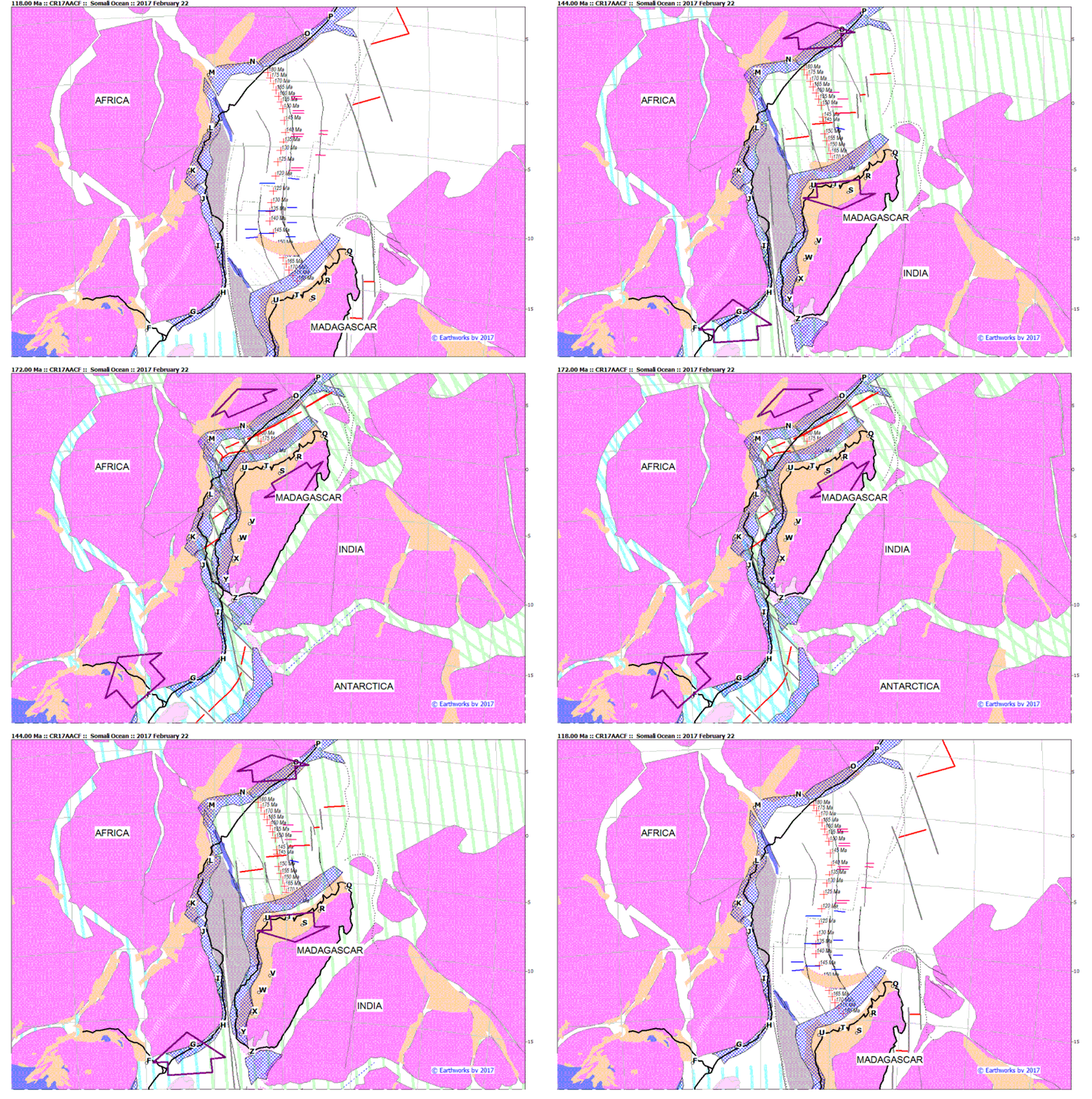
Somali Basin formation
The development of the East African margin during Jurassic and Lower Cretaceous times: a perspective from global tectonics, Colin V. Reeves, Petroleum Geoscience v. 24, pp. 41-56, 2017.
Together with DSDP and ODP core-hole programs, these seismic reflection and refraction surveys proved that the Somali Basin, upon which the Comoros volcanic island archipelago grew, was floored by thin oceanic crust, and not the continental crust west of the Davie Fracture Zone as found in Mozambique Area 1. This ocean floor formed during seafloor spreading in the Late Jurassic to Aptian, as Madagascar and India moved 2,000 km southwards, away from East Africa. Hence the oldest sediments on the ocean floor in the Comoros are Late Jurassic - Lower Cretaceous.
While Area 1 in Mozambique is on continental crust and Area 4 straddles the Davie Fracture Zone, everything eastward is on oceanic crust. This is seen by lower frequency magnetic anomalies over continents compared with oceanic crust, and by gravity and refraction seismic survey results showing thin shallow gabbro rocks with 7 km/s velocity and ~10 km thick. Seismic reflection and refraction data show the presence of a shallow Moho with 8 km/s velocity below the thin ocean crust, fracture zones and transform faults.
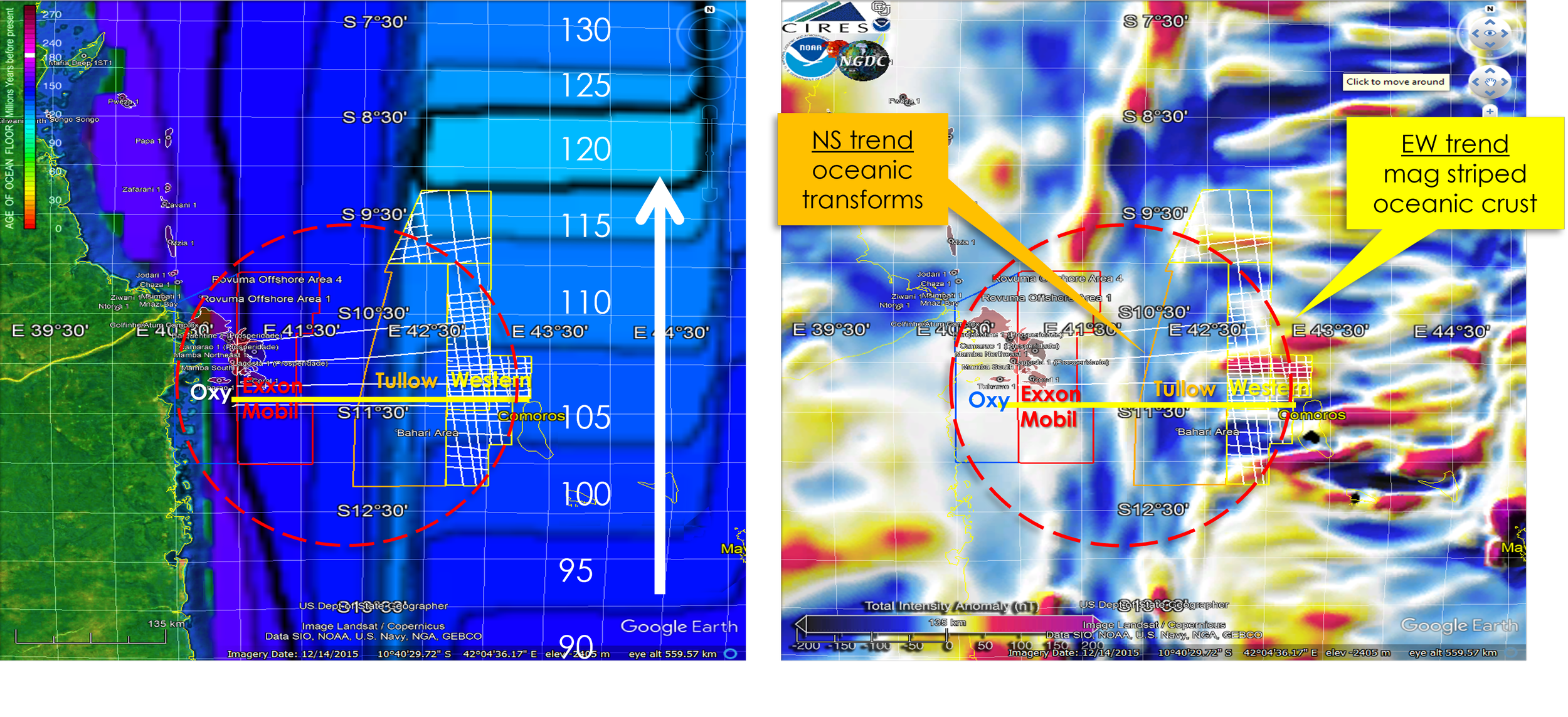
Seafloor magnetic anomalies
Age of ocean crust
The basement below Comoros blocks 38, 39 and 40 is Lower Cretaceous Ocean crust with alternating east–west magnetic ‘striped’ anomalies in the ocean floor. Basement below western blocks 35, 36 and 37 is similar but with the presence of well-developed N-S transforms faults and fracture zones, some with 2.5 km relief.
ION’s 2D seismic shows ocean fracture zones bounding the first sediments to be deposited on the ocean floor, of inferred Lower Cretaceous age. Lower Cretaceous units are inferred to be restricted Lacustrine type I source rocks, and marine Type II source rocks and burial history plots show these today to be in the oil window in all the blocks. This offers a compelling basis for the presence offshore Comoros of oil.
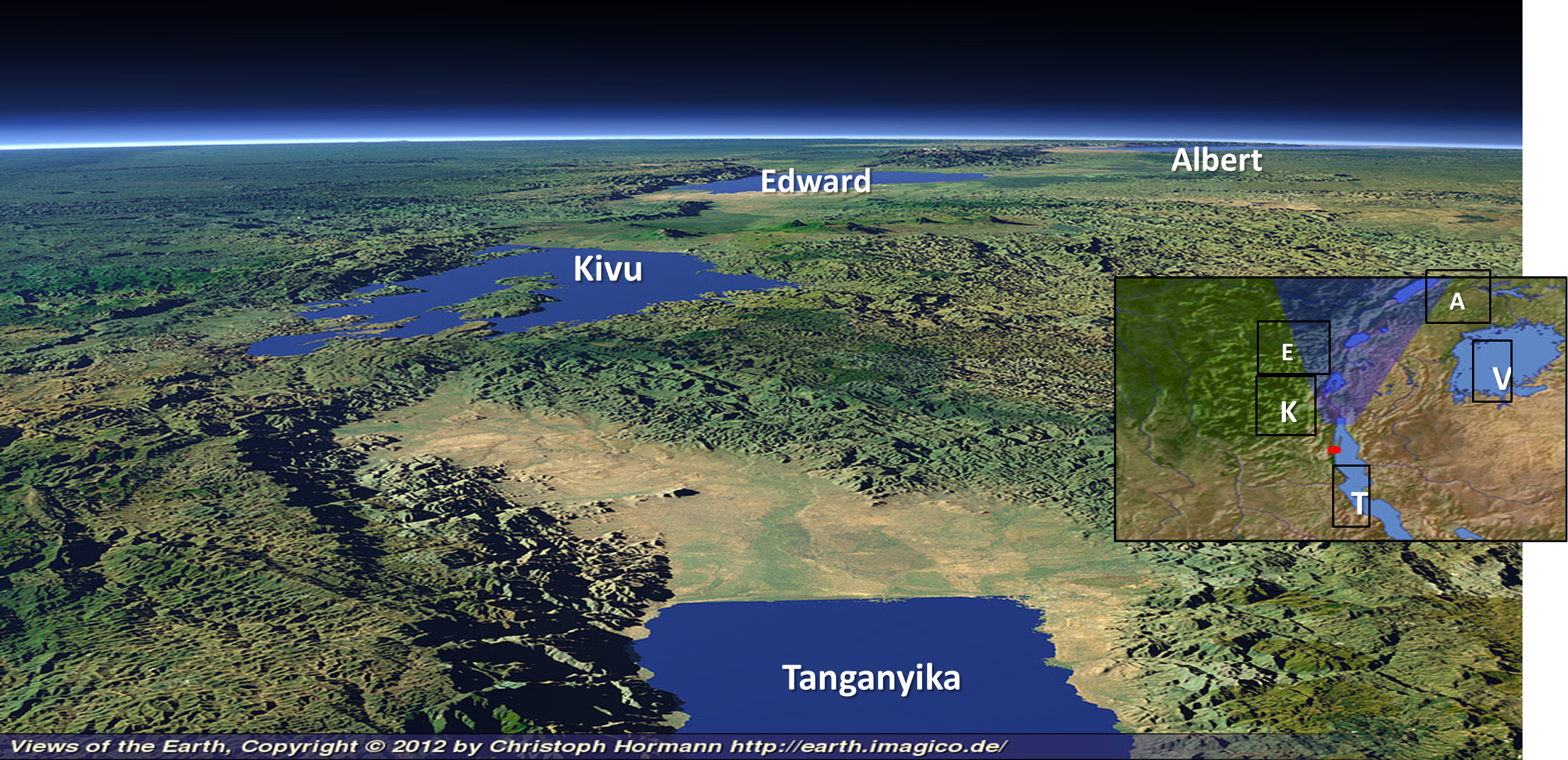
East African Rift valley lakes
The igneous rocks in the Comoros Islands and surrounding seas are younger, aged Miocene to present, which coincides with the onset of the East Africa Rift System, when asymmetric onshore rifts (left) hosting deep anoxic lakes with Type I source rocks began developing. This is a modern analogue for Late Jurassic rifting of Gondwana, when similar lakes formed in Somalia, Mozambique and the Weddell Sea Basin. These later became restricted marine basins after Lower Cretaceous sea floor spreading, with Type II source rocks deposited during anoxic events. Sea floor spreading ceased in the Aptian, with a third post-spreading anoxic event possibly occurring in the Maastrichtian.
Comoros prospects range in size up to 700 km² and showing similar trends and geology in deepwater Tertiary turbidite fans above the Lower Cretaceous oceanic basement. Many of these are associated with surface oil seeps detected by satellite synthetic aperture radar.
There appears to be considerable potential in these waters. A Competent Person’s Report produced on Tullow’s blocks 35, 36 and 37 estimated more than 7 GBO and 1 Tcf of non-associated gas was recoverable (https://www.discover-exploration.com/news/discover-exploration-farms-out-comoros-psc-to-tullow-oil)