
Deepwater Comoros Oil Legs
The science behind oil generation is geochemistry and it’s as complex and delicate as every chef knows: cooking time, temperature and the quality of starting materials all play a role in the result. Oil can be made geochemically very slowly, like cooking sous vide, at low temperature over millions of years; or cooked in a flash at elevated temperature but with the likelihood of overcooking or burning (“cracking”) if oils that are generated cannot escape.
In Mozambique Channel area the source rock responsible for generating the area’s giant gas fields is thought to be of Permian-Triassic age (200-250 million years old) resting on continental basement. Today they are deeply buried, ca.8-10 km, and at temperatures of ca. 200 degrees C which prevailed for millions of years in the past. This is in part because continental crust is more radioactive than oceanic crust, given its granitic composition, rich in potassium feldspar and uranium.
At this depth level today, source rocks maturity is overmature for oil and for gas. The combination of deep burial and large overburden paired with higher temperatures at depth resulted in overcooking original organic matter. Hence, today the products of this over cooking are mainly dry methane gas (C1).
By comparison, in Comoros there is both less overburden – only ca. 3500 m of sediments above basement – and in deeper water, ca. 3000 m deep, thus less insulating rock above, and the basement character is oceanic, hence not as radioactive. This combination offers the likelihood of a more perfectly cooked result with a large chance of success of remaining in the sous vide sweet spot for generating oil, not gas, and not dry gas. Slow cooking, not overcooking.
The two burial history charts shown here are for models of a geothermal rift setting in the Comoros, for an off-structure setting above, and for an on-structure one below. These demonstrate that in both models the base of the predicted Lower Cretaceous section is today in the oil window and at peak oil maturity.
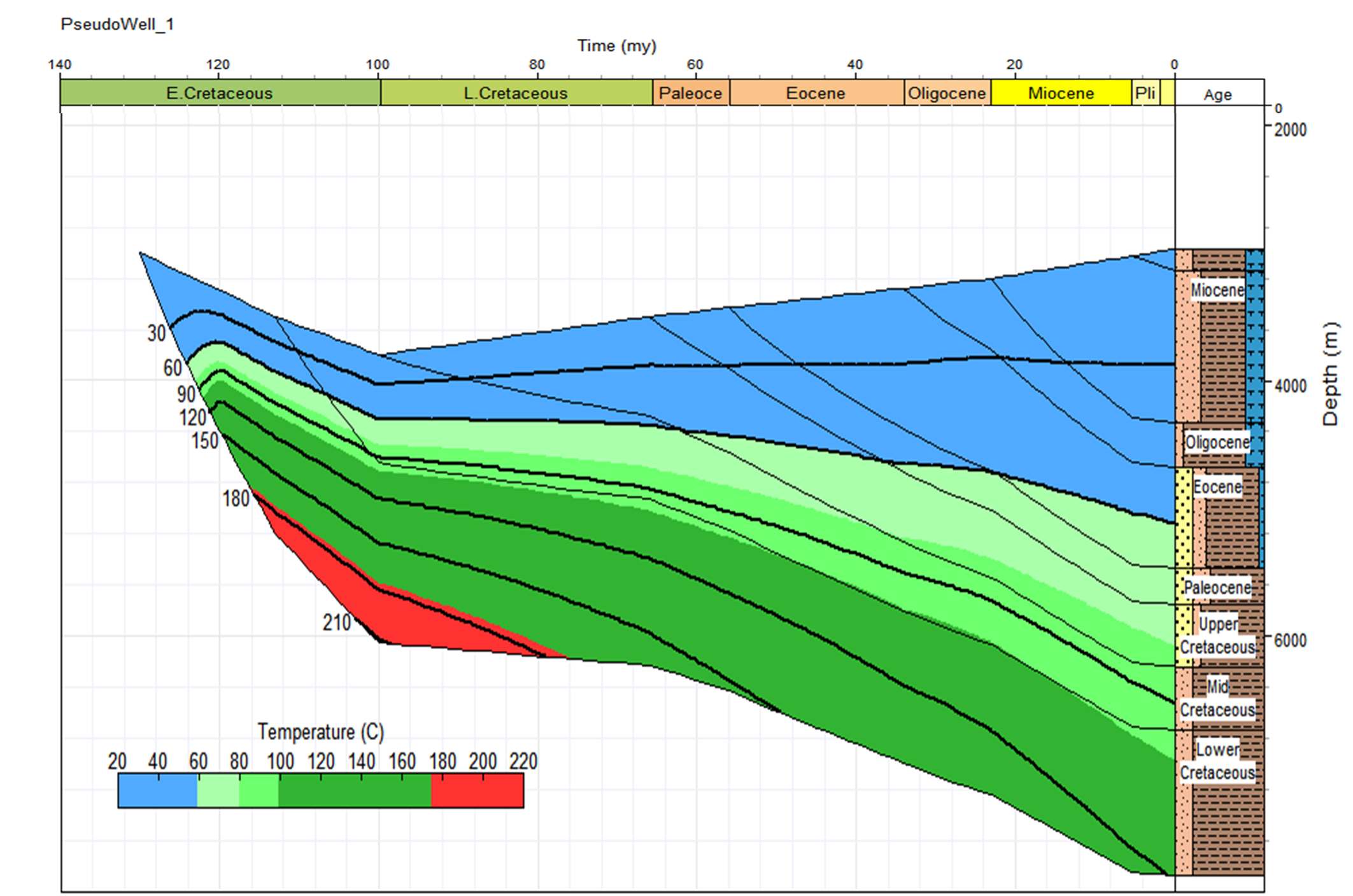
Off-structure age of oil and gas generation
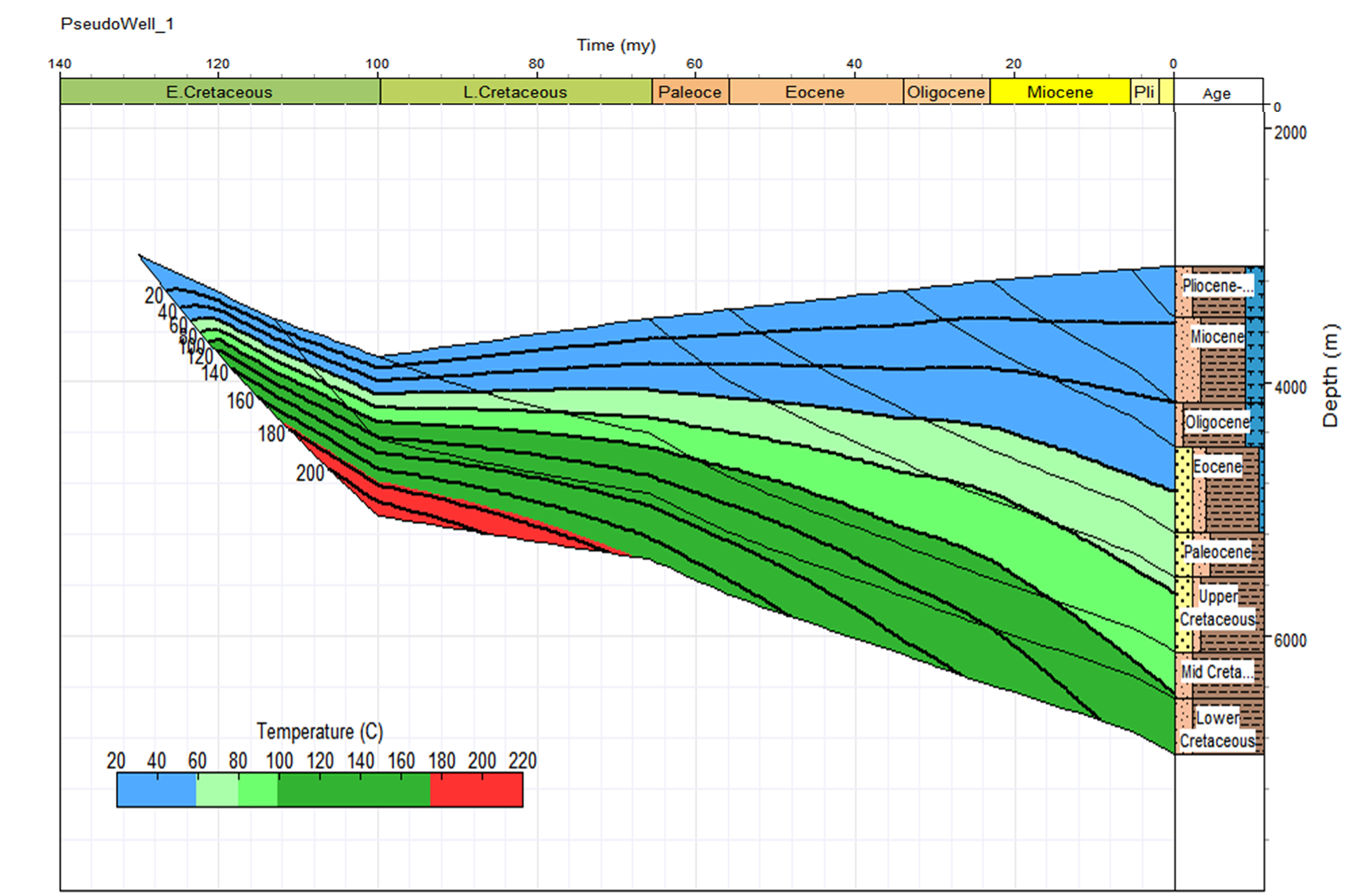
On-structure age of oil and gas generation